Choosing the wrong lift pattern can stall your progress before you even start. At M Cross C Equipment, LLC, we want to ensure you invest in the right geometry for your specific workload. This guide breaks down the functional differences between radial and vertical lifts to help you decide which Kymron model will actually perform best on your job site.
1. Lift Path
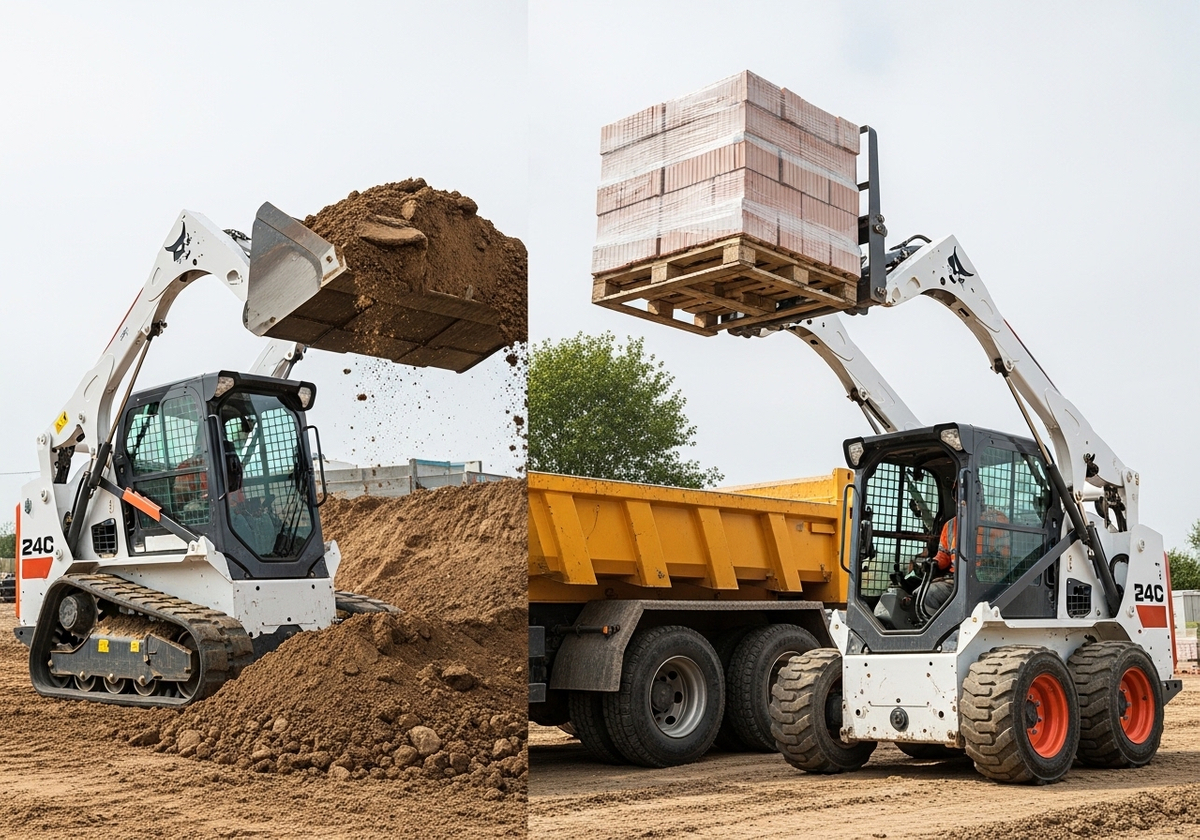
The most significant difference lies in the lift path. Radial lift skid steers feature an arc-shaped lift path, meaning the bucket moves in a curved motion as it rises. This design excels in digging, grading, and other ground-level tasks. Vertical lift skid steers, on the other hand, have a lift path that is more straight up and down. This provides greater reach at maximum height, making them ideal for lifting and carrying heavy loads, loading trucks, and working with pallet forks.
2. Reach and Height
Because of their lift path, vertical lift skid steers typically offer greater reach and maximum lift height compared to radial lift models. This advantage is particularly noticeable when fully extended. If you frequently need to lift materials to higher elevations or load trucks with tall sideboards, a vertical lift is generally the better choice.
3. Stability and Lifting Capacity
While both types are capable machines, vertical lift skid steers often boast a higher rated operating capacity (ROC) and improved stability, especially when handling heavy loads at maximum height. The vertical lift path helps distribute weight more evenly, reducing the risk of tipping. Radial lift models can sometimes feel less stable with heavier loads at higher elevations due to their curved lift path.
4. Applications
Radial lift skid steers are well-suited for tasks such as digging, grading, backfilling, and general material handling at lower heights. They're a great all-around choice for jobs where maximum lift height isn't a primary concern. Vertical lift skid steers shine in applications requiring high lifting and loading, such as truck loading, pallet handling, and stacking materials. They are also preferred for tasks where precise placement of heavy objects is crucial.
Choosing the right skid steer depends on the specific demands of your projects. Consider the types of tasks you'll be performing most often, the weight and height of the materials you'll be handling, and the terrain you'll be working on. At M Cross C Equipment, we understand that choosing the right equipment is essential for your success. As your trusted Kymron dealership and Your Mini Excavator Source for the Western United States, we're here to help you find the perfect machine for your needs. Contact us today to learn more about our Kymron skid steers and mini excavators, and let our experts guide you toward the best solution for your business or project. Don't forget to check out our website for our full list of available Kymron equipment!