High-pressure hydraulics are the muscle behind every Kymron machine, turning fluid flow into a massive digging and lifting force. At M Cross C Equipment, LLC, we believe understanding the physics of your equipment is the first step toward better operation and maintenance. This guide dives into the science of hydraulic pressure to show you how our machines deliver industrial-grade power with every cycle.
The Basics of Hydraulic Systems
At its core, a hydraulic system is a closed loop that uses a fluid, typically oil, to transmit force. When pressure is applied at one point in the system, that pressure is transmitted equally to all other points. This is based on Pascal's Law, which states that pressure applied to a confined fluid is transmitted equally in all directions. In practical terms, this means a small force applied to a small area can create a much larger force over a larger area.
High-Pressure Advantages in Kymron Equipment
Why high pressure? The higher the pressure in a hydraulic system, the greater the force it can generate. Kymron mini excavators and Kymron skid steers leverage this principle to deliver impressive digging force, lifting capacity, and overall performance. By using high-pressure hydraulics, Kymron equipment can be more compact and efficient, delivering maximum power in a smaller package.
Think about it: a Kymron mini excavator needs to be able to break through tough soil and lift heavy materials. High-pressure hydraulics provides the muscle needed to tackle these demanding tasks efficiently. Similarly, Kymron skid steers rely on hydraulic power to drive their wheels, operate attachments, and maneuver in tight spaces.
Components of a High-Pressure Hydraulic System
A typical high-pressure hydraulic system includes:
A Reservoir: This holds the hydraulic fluid.
A Pump: Driven by an engine (like the world-class Kubota, Perkins, or Yanmar engines found in Kymron equipment), the pump draws fluid from the reservoir and forces it into the system, creating pressure.
Valves: These control the direction and flow of the hydraulic fluid, allowing the operator to control the movement of different parts of the machine.
Cylinders: These convert the hydraulic pressure into mechanical force. The fluid pushes against a piston inside the cylinder, causing it to move and perform work.
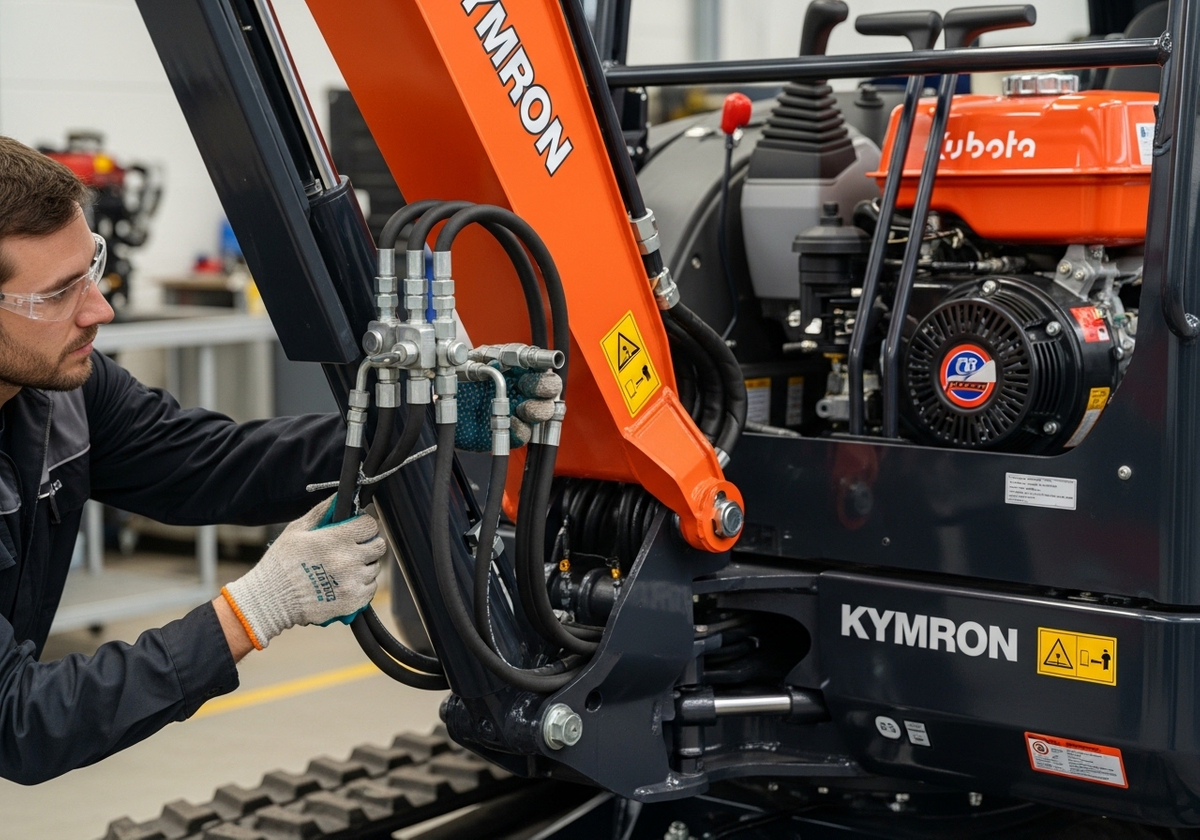
Hoses and Fittings: These connect all the components and carry the high-pressure fluid. The quality of these components is critical for safety and reliability.
The Kymron Difference: Quality and Reliability
Kymron equipment stands out for its commitment to quality in every aspect of its hydraulic systems. From the robotic welds ensuring structural integrity to the use of Parker and Eaton hydraulic drives and pumps, Kymron prioritizes components that can withstand the rigors of high-pressure operation. This focus on quality translates to greater reliability, reduced downtime, and increased productivity for our customers.
Optimizing Hydraulic System Performance
To keep your Kymron machinery running smoothly, it's essential to follow these best practices:
Regular Inspections: Check for leaks, damaged hoses, and worn fittings.
Proper Maintenance: Follow the manufacturer's recommendations for fluid changes and filter replacements.
Trained Operators: Ensure that operators are properly trained on the safe and efficient operation of the equipment.
High-pressure hydraulics are the backbone of modern heavy machinery, providing the power and precision needed to tackle a wide range of jobs. Kymron equipment leverages this technology with a focus on quality and reliability, delivering exceptional performance and value. As your dedicated Kymron dealership, M Cross C Equipment, LLC, is committed to providing you with the best mini excavators, tracked dump vehicles, and skid-steers for your needs. Contact us today to learn more about our Kymron equipment and how it can benefit your business. Be sure to ask about our parts, warranties, and expert support!